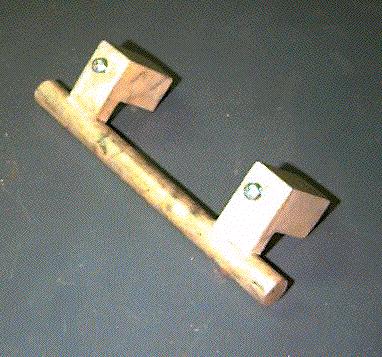
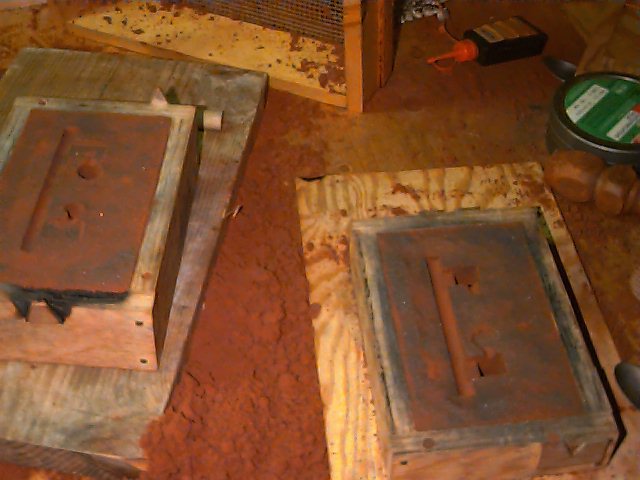
The pattern is a simple one to make but not to cast. It is a handle for one of the screen doors in our house. There are two square L-shaped stems and a round grip. The screws shown here were inserted after ramming to help remove the pattern from the mold.
There is no clear parting line due mainly to the round handle, and no filleting of the concave corners. Also, the round handle prevents it from lying flat on the bottom board.
I've put two coins under the flat top sections so that it rests on the bottom board with the stems standing straight up. This will help make it easier to remove from the sand. Parting dust (we use graphite) is dusted onto the bottom board and the pattern.
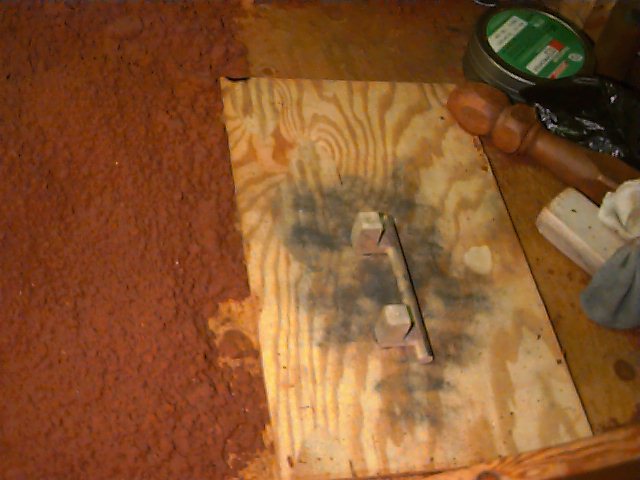
Then the drag (the bottom half of the mold) is rammed with sand. I'm "coping down" by uncovering the pattern down to the parting line. This will make it possible to remove the pattern from the sand in the drag without disrupting the cavity.
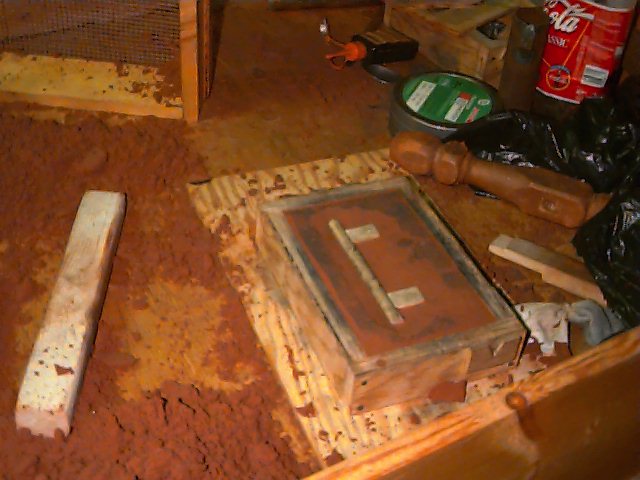
The cope (the top half of the mold) is then rammed with sand, with a sprue pin in place to make a hole for puring the metal. Then a funnel is cut.
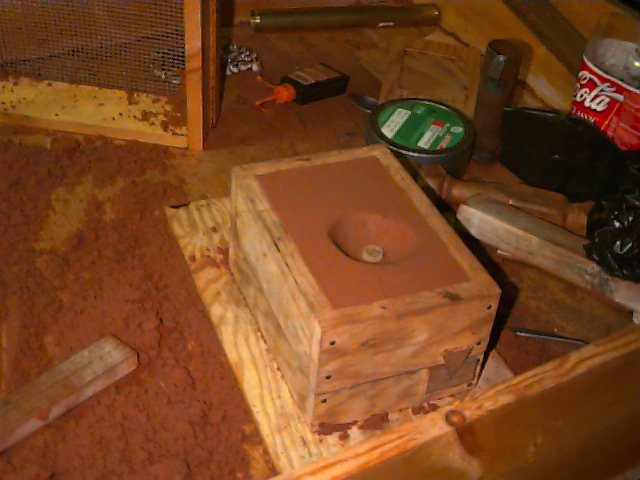
Now we can open the mold and remove the pattern. I also cut a riser near the end opposite the sprue, to make more metal available on that end, and cut gates to the sprue and the riser.
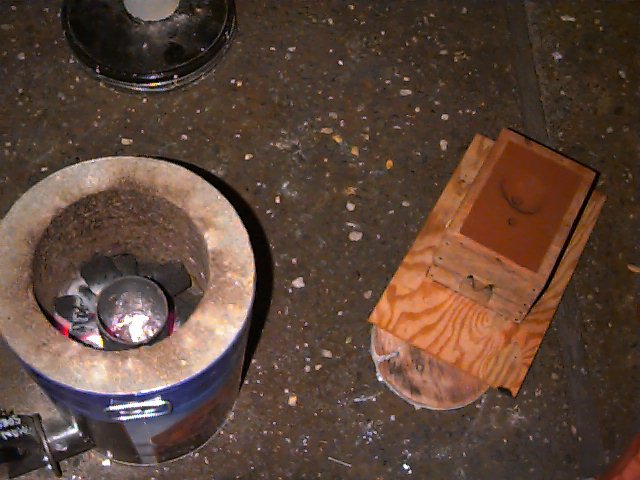
It's time to start up the furnace and move the mold outside. Here you can see the crucible with some molten aluminum, ready to pour:
And here is me pouring into the mold:
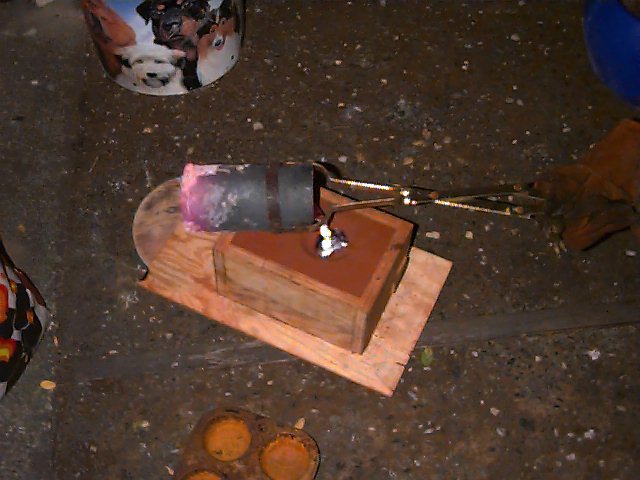
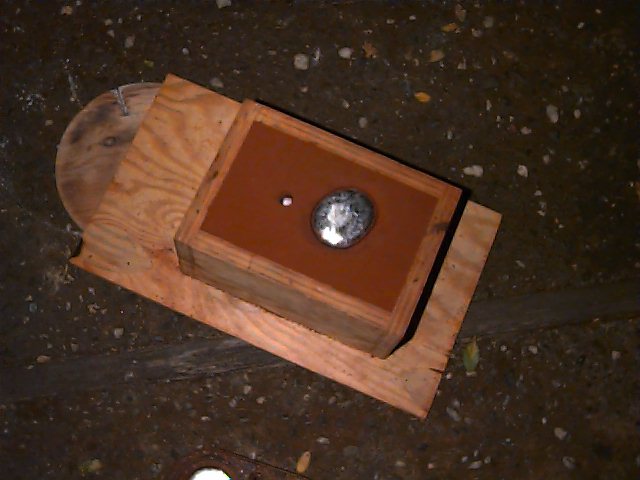
I poured until metal started coming up the riser. I could tell that it was a little too cold in the riser, and I was nervous because it seemed to take too long to get to that end. There's nothing I can do about it now!
It's bad to let the metal cool in the crucible, so we pour it into a rusty steel muffin tin. The rust keeps the new ingot from sticking in the tin.
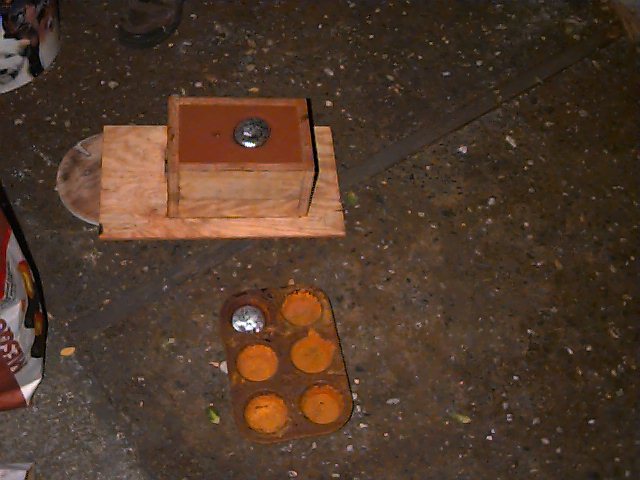
And now we have to wait for the metal to thoroughly cool. Opening the mold while it is still hot is not only dangerous but may distort the hot casting.
Also we leave the crucible in the furnace, shut off the blast and remove the fan, and cover the exhaust hole so the the furnace and crucible cool slowly.
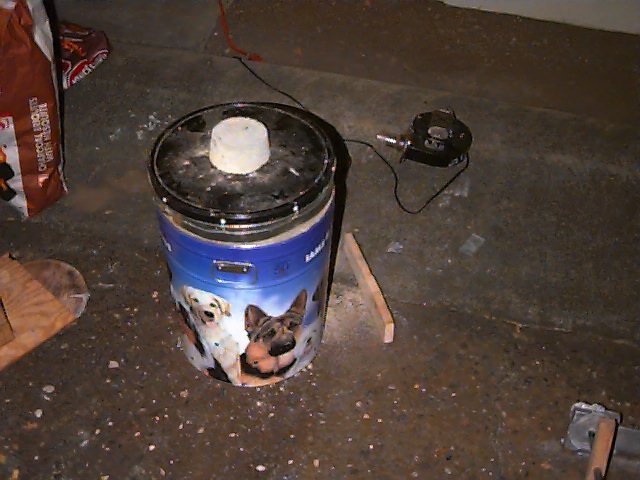
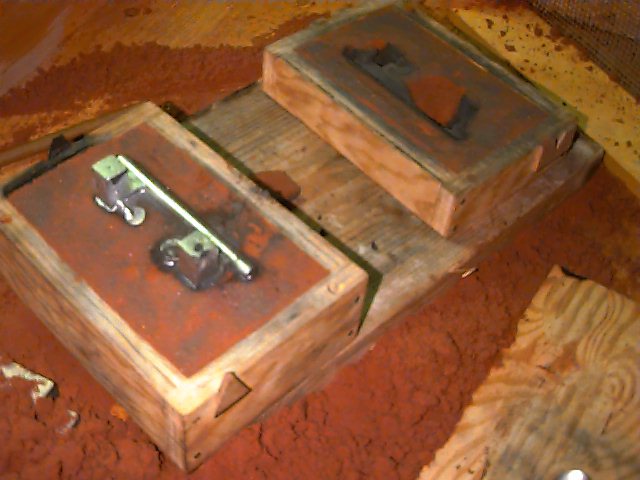
Here's a look at the result, unfinished, first embedded in the mold and then removed:
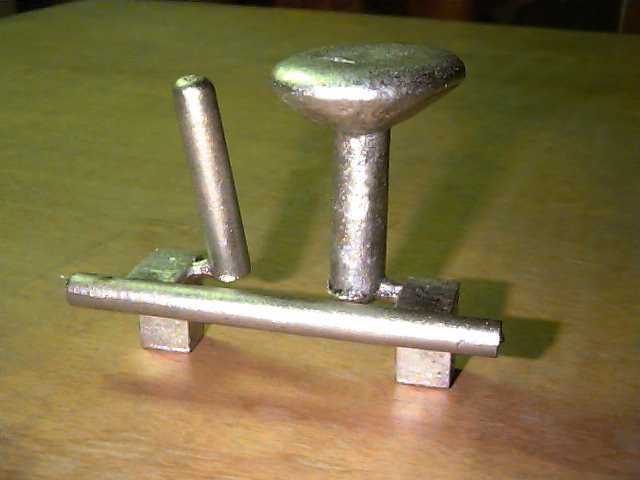
It turned out better than I had expected, given the irregular shape of the pattern and the apparent coolness of the metal being poured. There is quite a bit of flashing and the surface isn't as smooth as I would like. A little sawing, filing, and polishing should be enough to clean it up.